Travel blog
Sheki Travel Guide: Things to Do, Where to Stay, Transport and Costs
A complete guide to Sheki's attractions, Khan's Palace, Kish village, accommodation, local cuisine, transport and travel budgets.
Contents
About Sheki
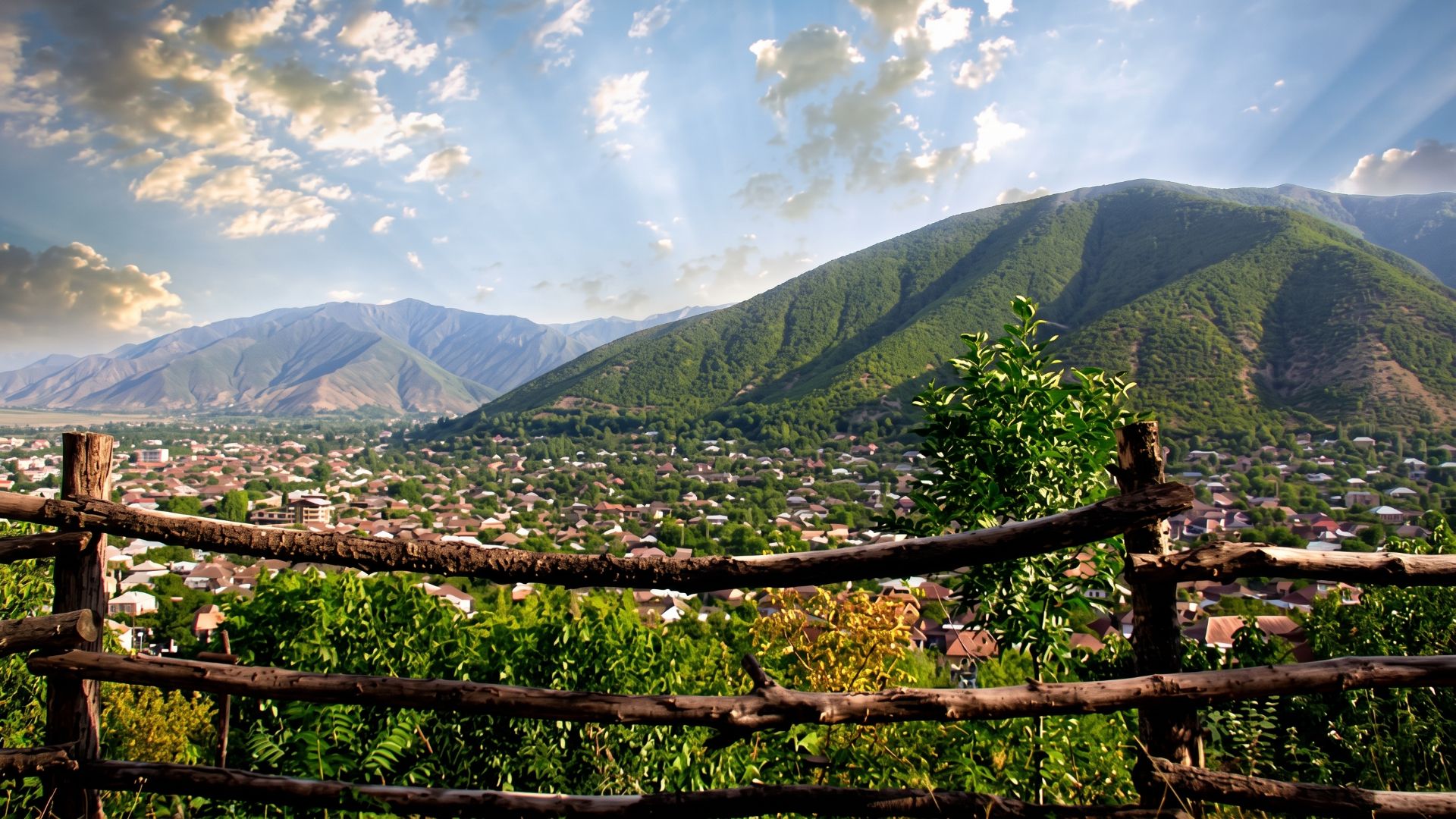
Sheki lies in northwestern Azerbaijan, in a valley where the Kish and Gurjana rivers meet on the southern slopes of the Greater Caucasus. One of the country's oldest and most colorful cultural centers, the city has more than 2,700 years of history. It was an important trade and craft hub on the Silk Road and the capital of the powerful Sheki Khanate in the eighteenth and nineteenth centuries. In 2019, Sheki's historic center and the magnificent Palace of the Sheki Khans were inscribed together on the UNESCO World Heritage List.
Sheki is famous not only for its Eastern Renaissance architecture and old caravanserais, but also for distinctive crafts: shebeke windows assembled without nails or glue, delicate kelaghayi scarves, silk production, and tekelduz embroidery. Centuries-old cobbled lanes, red-tiled houses, the ancient Albanian church in Kish, and lush mountain forests give the city a storybook atmosphere.
The district's population of about 190,000 is known for subtle humor, warm hospitality, and a distinctive dialect. Sheki cuisine is a highlight of Azerbaijani gastronomy. Legendary piti slow-cooked for hours in clay pots, walnut-filled Sheki halva, and bukme pastries draw both local and international visitors to the city.
| Information | Details |
|---|---|
| Region | Sheki-Zagatala region, southern slope of the Greater Caucasus |
| Distance from Baku | About 300 km via Shamakhi–Gabala / about 340 km via Yevlakh |
| Travel time | 4–5 hours, depending on transport and route |
| Elevation | About 500–700 m above sea level in the city center |
| Best time to visit | May–June and September–October for mild weather and seasonal colors |
| How many days? | At least 2 days; 3 days to explore the city and nearby villages comfortably |
| Currency | AZN (Azerbaijani manat) |
| Language | Azerbaijani; Russian and English are understood at many tourist sites |
| Emergency numbers | 103 (Ambulance) · 101 (Fire) · 102 (Police) |
Prices in this article are current for September 2026 and may change by season or during public holidays.
Why Visit Sheki?
Sheki is a living encyclopedia of Azerbaijani history. Few places are better for stepping into the atmosphere of earlier centuries, walking along old stone streets, drinking tea in the courtyard of an eighteenth-century caravanserai, and watching craftspeople assemble intricate shebeke windows.
The historic Yukhari Bash quarter sits on hilly terrain, so its streets are steep, narrow, and cobbled. Uncomfortable shoes can make walking difficult. During summer holidays and Novruz, queues may form at the Palace of the Sheki Khans and popular piti restaurants. Protected historic streets also leave limited space for parking at busy times.
Choose comfortable footwear and plan your visit outside the busiest hours, and Sheki will reward you with cultural depth, nostalgia, and an exceptional culinary experience.
- Ideal for: History and architecture lovers, culinary travelers, photographers, craft enthusiasts, and visitors interested in local culture.
- Less suitable for: Travelers seeking modern nightlife, those who dislike walking on steep streets, or anyone looking only for a beach holiday.
Where Is Sheki?
Sheki is in northwestern Azerbaijan, at the southern foot of the Greater Caucasus range.
It borders Oghuz and Gabala to the east, Gakh to the west, Yevlakh and Aghdash to the south, and the Republic of Dagestan in the Russian Federation to the north.
Sheki is a convenient regional transport base. The drive from Gabala takes about 1 hour 15 minutes, while neighboring Gakh is around 35–40 minutes away. For this reason, travelers exploring the Sheki-Zagatala region often use the city as their main base.
How to Get from Baku to Sheki
Transport and price comparison for the journey from Baku:
| Transport | Price per person | Travel time | Best for |
|---|---|---|---|
| Bus from Baku International Bus Terminal | 12–16 AZN | 5.5–6 hours | The most economical option for travelers in no hurry |
| Minibus (Sprinter) | 14–18 AZN | 4.5–5 hours | Frequent departures during the day |
| Baku–Gabala express train plus transfer | About 15–20 AZN | 3.5 hours plus a 1-hour taxi | A comfortable train journey followed by a transfer from Gabala |
| Car ride through Gezz | 14–22 AZN | 4–4.5 hours | Choose a suitable departure time from driver-posted car rides |
| Private taxi | 80–120 AZN | About 4 hours | Maximum flexibility and comfort for a family |
| Private car | About 35–45 AZN for fuel | 4–4.5 hours | Best for independently visiting Kish, Marxal, and surrounding areas |
Route note: The most scenic route is Baku → Shamakhi → Ismayilli → Gabala → Oghuz → Sheki, with mountain and forest views along the way. The flatter alternative is Baku → Kurdamir → Yevlakh → Sheki.
When to Visit Sheki
| Month | Average weather | Crowds | Prices | Main reasons to visit |
|---|---|---|---|---|
| January | About 2°C | Low | Low | Quiet winter walks, hot piti, and cottages with fireplaces |
| February | About 3°C | Low | Low | A snow-covered Khan's Palace and uncrowded museums |
| March | About 8°C | Very high | High | Novruz celebrations, Sheki sweets, and spring holidays |
| April | About 13°C | Medium | Medium | Blossoming gardens, fresh mountain air, and relaxed walks |
| May | About 18°C | High | Medium | One of the best months: green landscapes and mild walking weather |
| June | About 23°C | Very high | High | Silk Road International Music Festival and summer holidays |
| July | About 26°C | Very high | Highest | Cool Marxal forests, theater, and art festivals |
| August | About 26°C | Very high | Highest | Summer holidays and family time in Kish |
| September | About 21°C | High | Medium | Another ideal month: pleasant warmth and walnut and hazelnut season |
| October | About 14°C | Medium | Medium | Golden autumn colors and atmospheric street photography |
| November | About 8°C | Low | Low | A peaceful city and steaming oven-cooked piti on rainy days |
| December | About 4°C | Medium | Medium | New Year holidays and a winter caravanserai atmosphere |
In short: May–June and September–October offer the best conditions for walking and photography.
Where to Stay in Sheki
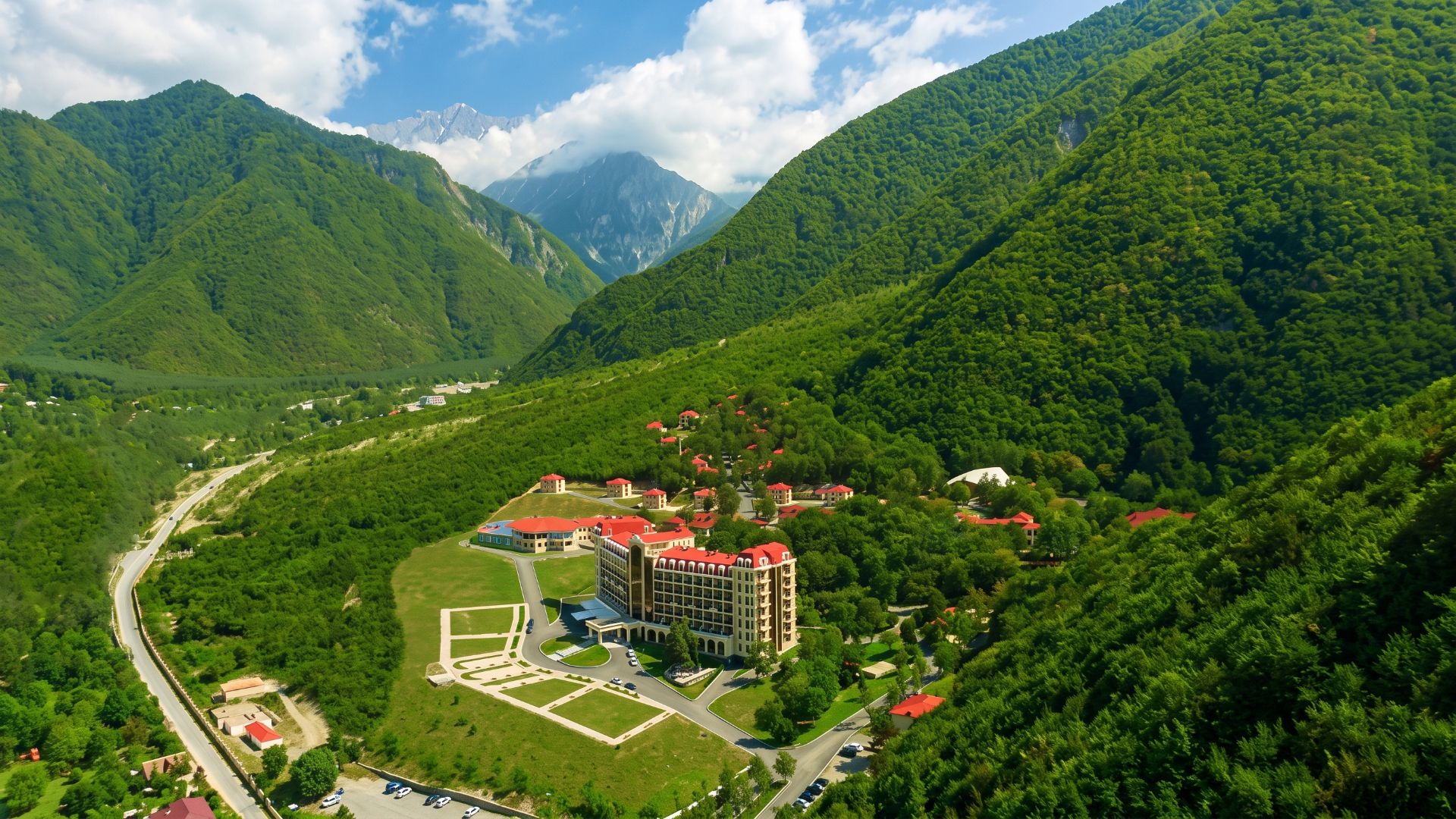
Sheki offers everything from historic caravanserai accommodation to forest A-frames and five-star mountain hotels:
| Accommodation | Price per night for 2 | What to expect |
|---|---|---|
| Historic boutique hotel or guesthouse | 40–90 AZN | A traditional courtyard, wooden balconies, samovar tea, and village breakfast |
| Sheki Caravanserai Hotel | 70–150 AZN | A unique stay in vaulted brick rooms inside an eighteenth-century monument |
| 4–5-star mountain or spa hotel | 140–350+ AZN | Forest setting, spa, pool, and premium service, including Marxal Resort & Spa and Sheki Palace |
| Forest cottage or A-frame villa | 100–260 AZN | A quiet choice around Khan Yaylaghi and the Kish valley for families and groups |
Where does it make most sense to stay?
- Yukhari Bash, near the fortress and palace — best for walking to historic monuments, shebeke workshops, and museums.
- City center, around Mirza Fatali Akhundov Avenue — convenient for restaurants, shops, and the market, with more affordable prices.
- Marxal and Khan Yaylaghi — ideal for a quiet, upscale forest stay.
- Kish village — guesthouses surrounded by village calm, mountain air, and historic landmarks.
Tip: Rooms in the historic caravanserai have old stone walls, and some prioritize atmosphere over modern luxury.
Things to See and Do in Sheki
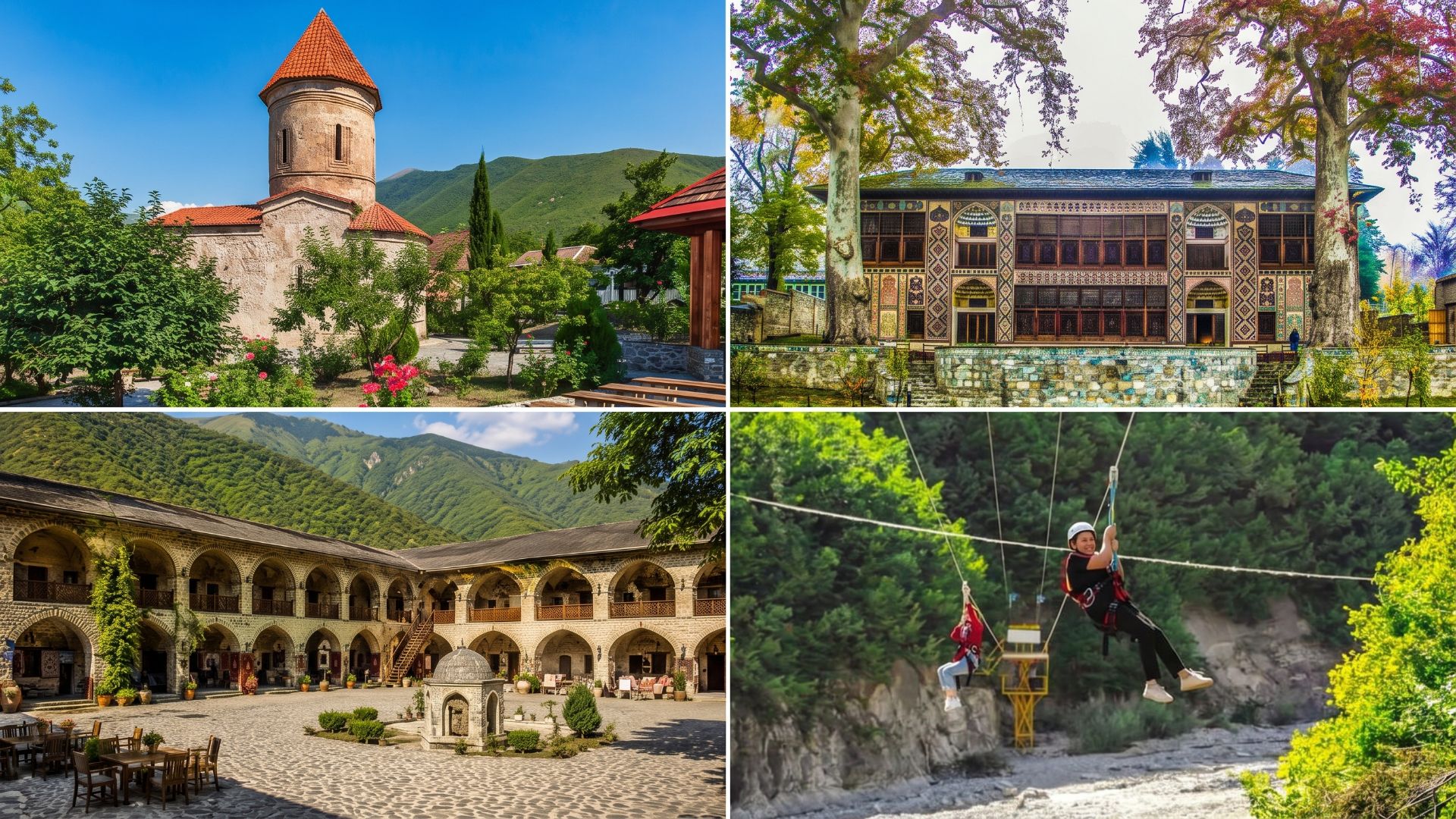
The list runs from Sheki's historic center toward its mountain villages:
1. Palace of the Sheki Khans and Shebeke Workshop
(Yukhari Bash · Admission about 5–10 AZN · 1.5–2 hours) Built by Huseyn Khan Mushtaq in 1762, this is a masterpiece of Eastern architecture. The palace's famous shebeke windows combine thousands of pieces of colored glass and wood without nails or glue, while its interiors preserve remarkable wall paintings. At the nearby workshop, you can watch shebeke masters at work.
2. Upper Caravanserai Complex
(Yukhari Bash / M. F. Akhundov Street · Courtyard entry free · 1 hour) One of the finest eighteenth-century caravanserais on the Silk Road. Its monumental arched gateway, spacious courtyard, and red-brick rooms evoke a medieval trading city. Stop for samovar tea in the courtyard.
3. Kish Village and the Ancient Albanian Church
(About 6 km from the center · Admission about 3–5 AZN · 2 hours) This ancient church, associated with Saint Elishe and dating in its surviving forms from the first to twelfth centuries, is often called the mother of churches in the Caucasus. Archaeological excavations in its grounds, also studied by Norwegian explorer Thor Heyerdahl, display old burials beneath protective covers.
4. House of the Shekikhans
(Center · Admission about 3–4 AZN · 45 minutes) An eighteenth-century winter residence of the khan's family. Smaller than the main palace, it is an artistic treasure with delicate shebeke windows and miniatures inspired by Nizami Ganjavi's Khamsa.
5. Sheki Fortress Walls (Nukha Fortress) and Museum of Local History
(Yukhari Bash · Free grounds · 1 hour) Strong stone walls surround the Palace of the Sheki Khans. Inside the fortress are the Museum of History and Local Lore, a museum of applied arts housed in an old round church, and an art gallery.
6. Craftsmen's Street and Sheki Silk Workshops
(Yukhari Bash · Free · 1–2 hours) See demonstrations of pottery, hat-making, coppersmithing, tekelduz embroidery, and silk kelaghayi production. You can learn how authentic Sheki scarves are made and buy locally crafted gifts.
7. Sheki Juma Mosque and Omar Efendi Mosque
(Center · Free · 45 minutes) These nineteenth-century landmarks, with decorated minarets and timber-supported prayer halls, represent Sheki's religious architectural heritage.
8. Marxal Recreation Complex and Khan Yaylaghi
(About 8 km from the center · Entry or services vary · 2–3 hours) A mountain recreation area in Sheki's forested hills, known for lakeside paths, clean air, and leisure facilities.
9. Galarsan-Gorarsan Fortress
(4 km above Kish village · Free / hiking · 2–3 hours) An eighth- to ninth-century stronghold above the steep bank of the Kish River. It became famous through Haji Chalabi Khan's resistance to the forces of Nader Shah in 1743. Reaching the ruins requires a moderate uphill hike.
10. Sheki Halva Shops and Confectioneries
(Center / M. F. Akhundov Street · 30 minutes) Historic shops run by well-known masters such as Ali Ahmad and Anvar Usta sell freshly made halva, pakhlava, and bukme. Some allow visitors to observe the preparation process.
Lesser-Known Places in Sheki
A private vehicle or local driver is recommended for these places:
- Fazil Village's World of Eternal Silence, or Labyrinth Museum — A distinctive underground archaeological museum where ancient graves and skeletons are displayed where they were found.
- Kunjut Village and Waterfall — A forest waterfall hidden in Sheki's steep mountain valleys and away from the main tourist crowds.
- Bash Shabalid and Bash Layisghi villages — Scenic communities known for old chestnut forests, springs, and traditional mountain life.
- Chalabikhan Estate — A historic residence and recreation area in a quiet forest at the foot of the mountains.
- Shin Canyon and River — Dramatic terrain for rock climbing and riverside picnics.
Sheki Itineraries
One day (quick introduction)
- 08:00 Arrive from Gabala or leave Baku early
- 10:00 Palace of the Sheki Khans and shebeke workshop
- 12:00 Upper Caravanserai and Craftsmen's Street
- 13:30 Lunch with authentic Sheki piti at a historic restaurant
- 15:00 Kish village and the ancient Albanian church
- 17:00 Buy Sheki halva and enjoy samovar tea
- 18:30 Return journey
Note: One day is not enough for every museum and forest area.
Two days (recommended weekend)
- Day 1: Arrive in Sheki → Khan's Palace and fortress walls → House of the Shekikhans → tea at the Upper Caravanserai → kelaghayi and souvenirs on Craftsmen's Street → overnight in the historic center
- Day 2: Village breakfast → Kish and the Albanian church → hike to Galarsan-Gorarsan Fortress, or walk in Marxal forest → piti and halva for lunch → return to Baku in the afternoon
Three days (complete and relaxed)
- Day 1: Historic Sheki: Khan's Palace, caravanserais, House of the Shekikhans, museums, and mosques
- Day 2: Kish, the Albanian church, Galarsan-Gorarsan Fortress, and relaxation around Marxal Lake
- Day 3: Labyrinth archaeological museum in Fazil → Bash Shabalid village → continue to Ilisu in neighboring Gakh, or return to Baku
What to Eat in Sheki
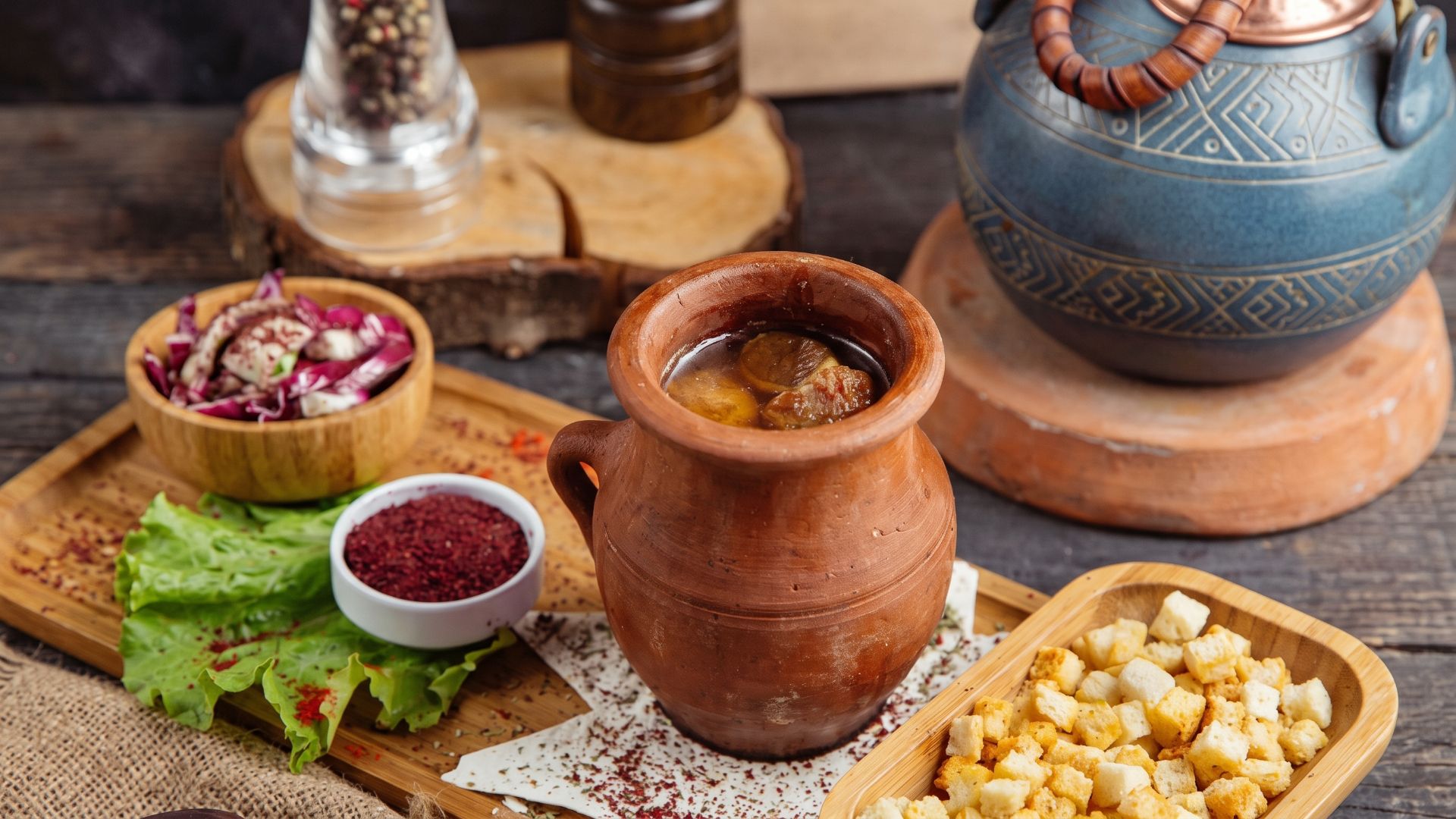
Sheki cuisine is one of Azerbaijan's richest and most distinctive culinary traditions:
- Sheki piti: Mutton, tail fat, chickpeas, saffron, and chestnuts slow-cooked for 6–8 hours in individual clay pots. Piti is eaten in two stages: tear lavash into a bowl, add sumac, and pour over the broth for the first course; then mash the meat and chickpeas for the second. (9–16 AZN)
- Sheki halva, or pakhlava: A distinctive sweet made from a fine lattice of rice-flour strands layered with ground walnuts or hazelnuts, cardamom, coriander seed, and saffron syrup. (12–20 AZN per kilogram)
- Sheki ghirmabadam and bukme: Delicate tea pastries prepared with walnut filling between thin layers of dough.
- Ovrishta: Meat or chicken fried with cornelian cherries, sour plums, or pomegranate seeds. (14–22 AZN)
- Walnut and white-cherry preserves: Traditional preserves served with strong tea flavored with mountain thyme.
Where to eat: Dozens of traditional piti restaurants operate in Yukhari Bash and along Akhundov Avenue. Expect an average bill of 14–25 AZN per person. Buy halva fresh from one of the historic confectioneries.
Getting Around Sheki
Walking is the best way to experience the historic center, but you will need transport for Kish and Marxal:
- Local taxi: Short city trips cost 2.5–4 AZN. A ride to Kish is about 5–8 AZN, while a return trip to Marxal or Khan Yaylaghi costs around 15–25 AZN.
- City minibuses: Low-cost routes from the central market and bus station serve Kish, including routes 11 and 15, and other destinations for about 0.50–0.80 AZN.
- Private car: Streets in Yukhari Bash are narrow and cobbled, so parking nearby and continuing on foot is usually easier.
How Much Does a Sheki Trip Cost?
Average per-person cost for a full two-day trip:
| Expense | Solo | 2 people | 4 people |
|---|---|---|---|
| Return transport | 28–40 AZN (Bus or Gezz) | 35 AZN (Private car) | 18 AZN (Private car) |
| City and village transport | 25–45 AZN (Taxi) | 12 AZN (Fuel) | 6 AZN (Fuel) |
| Accommodation, 1 night | 45–120 AZN | 25–70 AZN | 15–40 AZN |
| Food for 2 days | 35–70 AZN | 35–70 AZN | 35–70 AZN |
| Extras: tickets, kelaghayi, and halva | 25–50 AZN | 25–50 AZN | 25–50 AZN |
| Total per person | About 160–325 AZN | About 130–240 AZN | About 100–185 AZN |
Traveling as a family or group reduces the per-person cost because transport and accommodation can be shared.
Useful Information for Sheki
- Footwear: Historic streets are paved with river stone, so wear flat, comfortable, non-slip shoes.
- Ordering piti: Popular restaurants may sell out between 13:00 and 15:00. Do not leave lunch too late.
- Cash: Cards work in the city center, caravanserai, and larger hotels, but small craft shops, confectioneries, and villages often prefer cash. Carry at least 40–80 AZN.
- What to buy: Authentic silk kelaghayi scarves, Sheki halva and bukme, tekelduz embroidery, shebeke souvenirs, clay piti pots, and walnut preserves.
Where to Go After Sheki
Extend your journey with one of these nearby destinations:
- Gakh and Ilisu (about 35 km, 35 minutes) — Sumug Fortress, Ulu Bridge, Ramrama Waterfall, and historic Georgian churches.
- Zagatala and Balakan (about 75–110 km, 1–1.5 hours) — Zagatala Fortress, hazelnut orchards, Pari Fortress, and Katekh Waterfall.
- Oghuz and Gabala (about 45–85 km, 40–60 minutes) — Khal-Khal Waterfall, Tufandag cable cars, and Nohur Lake.
- Mingachevir (about 70 km, 1 hour) — Boat trips on the Kura River and the Mingachevir Reservoir.
Frequently Asked Questions
1. How far is Sheki from Baku, and how long does the journey take?
The distance is about 300 km. Driving via Ismayilli and Gabala takes around 4–4.5 hours, while a bus takes 5.5–6 hours.
2. How many days should I spend in Sheki?
Two days are enough for the historic center and Kish village. Plan 3–4 days if you also want to include Gakh and Ilisu.
3. How should authentic Sheki piti be eaten?
Piti is eaten in two stages. First, pour the broth over torn lavash and sumac and eat it as soup. Then mash and eat the meat, tail fat, and chickpeas left in the pot.
4. Can I take photographs inside the Palace of the Sheki Khans?
Flash photography is prohibited to protect the old wall paintings and pigments. Some rooms may charge a small additional fee for personal photography.
5. Is Sheki suitable for families with children?
Yes. The city has spacious parks and family recreation centers such as Marxal. Keep the uneven cobbled streets in mind when using a stroller.
6. How long does Sheki halva keep, and how should it be stored?
Natural Sheki halva stays fresh for 10–15 days in a dry place at room temperature and for up to one month in a refrigerator.
Conclusion
With its magnificent Khan's Palace, colorful shebeke windows, welcoming people, and memorable cuisine, Sheki is one of the brightest jewels of Azerbaijani culture. Plan your transport and accommodation ahead to enjoy its storybook atmosphere at a relaxed pace.
Author: Gezz · Published: 1 September 2026 · Last updated: 1 September 2026